Showing posts with label Key Stage 1. Show all posts

Friday, 24 November 2017

Hortense and the Shadow by Natalia and Lauren O'Hara

Hortense and the Shadow by Natalia and Lauren O'Hara - Review for Primary Teachers

Hortense and the Shadow is a debut picture book from sisters Natalia and Lauren O'Hara. It is a haunting, folk-tale like story. The protagonist, Hortense, is 'kind and brave' but she is sad. She hates her shadow. It follows her everywhere she goes, does everything she does and it grows 'tall and dark/and crooked' when night falls. She believes her shadow hates her too. However, one cold night, when bandits surprise her in the woods, it's her shadow that saves her. Hortense then realises that rather than being a nuisance, her shadow is vital part of her and so, in the style of all good fairy tales, all ends happily ever after.

The story's themes ( self-esteem, self-identity and finding inner strength) are developed subtly. 
Although the story is not written in rhyming text, it certainly has a poetic feel about it. The book is marketed for children aged 5-7 years. However, the language and style of the story has a lot a potential for use in the KS 2 classroom.  The descriptions of the setting have a fairy tale quality about them 'Through the dark/and wolfish woods,/through the white and silent snow.' These could be explored not only in terms of the noun phrases and alliteration  but also the rhythm which gives them that timeless quality. Investigations which collect examples from other fairy tales (old and modern) would help develop and awareness of these features which children could then be encouraged to use in their own fairy tale composition. 

The story was inspired by stories told to the sisters by their Polish Grandmother and this is evident in the watercolour illustrations, which are reminiscent of Polish fairy tales. The buildings have the feel of Eastern Europe with onion domes, turrets and ornate furniture. There is also a slight Gothic feel with all the garden tracery and architectural embellishment. 

Hortense feels as though 'someone is watching her' and careful examination of the illustrations show that she indeed being watched, as the bandits are hidden within the wintry blue and grey illustrations. Sometimes they are easier to spot as one of them wears a red hat. Younger children will enjoy trying to spot the hidden bandit on the page.

Some of the vocabulary used throughout the book would prove challenging for most children within the targeted age range. The placing of the words on the page using 'word painting' might also prove challenging for some children. As Hortense's shadow grows, so does the size of the text. As Hortense falls down the steps the text also 'falls' down the steps. A great deal of the text is also positioned on top of the illustrations and as a result changes colour. None of these things should put you off reading this exquisite book. They make it an ideal book for sharing with children either as a class read or as a group read. They provide an abundance of opportunities to talk about the book and invite multiple readings.


Published: October 2017
Publisher: Puffin
ISBN: 978-0141374024


Wednesday, 7 September 2016

A Child of Books by Oliver Jeffers and Sam Winston


 'I am a Child of Books. I come from a world of stories. And upon my imagination, I float.' These are the opening lines of this beautiful picture book, which follows a young girl as she takes a little boy on an adventure by opening his imagination. As they journey along, she teaches him that you don't need to travel the world to have adventures, you can travel anywhere you like with the aid of a book, as books are the key to letting your imagination flow freely.

Its very simple plot is very effective. The story itself is told through very few words. However, the artwork on every page is an explosion of words from a range of children's literature, which are cleverly presented to create the sea, clouds, mountains and monsters.

The written story and the illustrations visually take you on a journey. The passages have been carefully selected to echo each illustration. The sea is created from texts about journeys: The Voyage of Dr Doolittle, Robinson Crusoe, Gulliver's Travels (which isn't a children's book but Jeffers and Winston can be forgiven for that).


The little girl leads the boy down the path of adventure which is created from the words from Alice's Adveentures in Wonderland. They climb the mountains of Neverland and enter the caves of Kidnapped before playing in the fairy tale woods and extracts from Rapunzel form the rope from the castle. Many of the illustrations use muted colours but interestingly and significantly the house where the little girl lives is bold and bright. The 2 page spread which features the words ' For this is our world we've made from stories.' is the most colourful of the whole book emphasising the bright, colourful world of stories and books.

It is the perfect book to launch a school book week or reading challenge. Pupils in upper key stage 2 could be challenged to identify all the titles featured. (Apparently there are 42 classic books and lullabies in total - I haven't spotted them all yet!).

It  would also be interesting to explore the 'word painting' that is used. Children could find appropriate passages from books they have read  to create their own images of worlds they have encountered and visited through story. Applications such as wordle , tagul and tagxedo would be useful in acheiving this.

In the back slip of the dustcover, Jeffers and Winston state 'From the very beginning we both wanted to create a tale that celebrates our own love of classic children's literature with an added modern twist. For us it was about capturing some of the magic tha happens when you first get lost in a timeless story, but doing it in a way that readers haven't seen before.' They certainly have done that.


Publisher: Walker Books
Publication Date: Sept 2016
ISBN: 978-1-4063-5831-5


Tuesday, 17 May 2016

The Littlest Owl by Caroline Pitcher and illustrated by Tina Macnaughton

The Littlest Owl by Caroline Pitcher and illustrated by Tina Macnaughton is a picture book story about the trials and tribulations of Four, the youngest of four baby owls, who is 'so dumpy and small, a downy white ball.'

His three older siblings snatch the food before he can get to it and trample on him causing his Mum some degree of concern. Soon, the older owlets learn how to fly but Four can't quite manage it no matter how hard he tries.


Despite being smaller than his siblings, he doesn't give up. Like many younger brothers and sisters he wants to be just like his older siblings. This is something that children who have older brothers and sisters will probably relate to.

It would make a lovely read-aloud story for early years/foundation stage and has the clear message that we all develop at different rates. Children from year 1 up, who have successfully mastered phase 5 phonics, will be able to read the text independently. There are some items of vocabulary which children may be unfamiliar with and for that reason it would work well as a guided reading text.

Guided reading would also be an opportunity for teachers to scaffold children's emerging skill of inference. The character of each of the owlets is developed through the dialogue and discussions about how this informs us about their feelings will be instrumental in securing children's comprehension of the text.

The dialogue could also be used as a model for children's own writing. Pitcher makes use of a whole host of synonyms for said which children could collect. 

The illustrations complement the text. The owl's home glows with warm, golden tones. These contrast with the dark blue tones of the night sky.  The storm is depicted in greeny-grey blue tones and the ferocity of the storm is indicated by the sheer movement of the leaves in the trees and the swirls in the dark foreboding sky. The contrast from the warm, cozy glow of the Owls' home at the beginning of the story to the dark, menacing tones at the end would be good to use as a stimulus for discussing setting.

It would also be useful to read this alongside Martin Waddell's Owl Babies. Both are stories about a family of baby owls and whilst the themes and plots are different there are some similarities which could be explored.


Published: 2008
Published by:Little Tiger Press
ISBN: 978-1-84506-622-2


Saturday, 20 February 2016

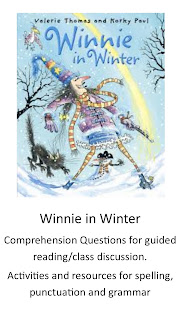
Winnie in Winter by Valerie Thomas and illustrated by Korky Paul

Winnie the witch and her cat Wilbur are fed up with feeling frozen and sick of the sight of snow. Winnie casts a spell and turns everything into summer. That is a big mistake. Her neighbours invade her garden and Winnie realises summer’s shortcomings. So she decides to cancel her spell and bring back the winter.

Winnie is a loveable witch who lives with her cat Wilbur. Children will enjoy reading about her antics and as there are so many titles about her, these make a great resource for an author study.

In this particular story, the contrasts are made between winter and summer in terms of clothing, weather, flora and fauna. References are made to animals who are hibernating and flowers that only grow in Spring/Summer. This makes it a good story to read aloud to any class who are studying the Seasons. There is also an interesting PHSE lesson in the story about respecting other people's property.

In terms of English, the story is simply told, making it ideal for those children who have successfully achieved phase 5 phonics. The text can also be used as a stimulus for a number of the spelling, punctuation and grammar objectives identified for year 2; in particular, apostrophes for omission, adjectives, noun phrases, the use of commas for separating words in a list, commands and sentence structure.

Korky Paul's illustrations give a certain charm to the story. Wilbur's facial expressions are wonderful and the detail in each of the full page spreads means there is always plenty to talk about. 

In Year 2, children will be able to explore the similarities between this story and other Winnie stories and will enjoy composing their own Winnie story, which they could illustrate in the style of Korky Paul.

A lovely, picture to share with children aged 3-7 as a read aloud book and as a literacy resource in year 2. Every Key Stage 1 library should have these on their shelves.


Publisher: Oxford University Press
Publication Date: 1996
ISBN: 978-0-19-273689-5


Friday, 22 January 2016

Charlie Crow in the Snow by Paula Metcalf and illustrated by CallyJohnson-Isaacs


Stories about the Seasons
Metcalf's story Charlie Crow in the Snow is a lovely picture book story about friendship and the changing seasons.

Charlie Crow loves him home in the tree and enjoys visits from his friends Bear and Swallow. However, things begin to change, much to Charlie's surprise. Charlie Crow hasn't seen snow before and when he does see it for the first time he panics and goes to find his friends. He can't find bear and Swallow. However, he does bump into Squirrel who is just as confused and between them they set off to find Bear and Swallow who will surely know the answer to what is going on.


The story beautifully introduces children to the changing seasons from Autumn through to winter. Children will learn about how leaves fall from trees, water turns to ice, snow, hibernation and migration.

It would make a lovely read-aloud story for Foundation Stage and Key Stage 1. It would also make a lovely guided read for children who have mastered phase 5 phonics. In terms of comprehension there are ample opportunities to teach wither through shared or guided reading each of the 5 domains that are identified in the Key Stage 1 Reading Tests, in particular 1a vocabulary, 1b identify key aspects of fiction and 1d make inferences from the text.

The dialogue within the story uses a wide variety of synonyms for said such as squawked, whimpered, cried, shrieked and exclaimed allowing teachers the opportunity to develop children's vocabulary, consider characterisation and further children's grammatical knowledge in context.

The illustrations are bright and clearly depict the different colours and tones associated with the different seasons. Also, the expressions on the characters faces are an absolute delight. The positioning of the eyebrows on each of the characters emphasise the emotions felt by each of the characters at any one particular time and would therefore support the teaching of comprehension  and emotional intelligence. My favourite, I think is the page where Charlie Crow and Squirrel attempt to hibernate with Bear.

Characterisation and emotions


Publisher: Macmillan 
Publication Date: 2013
ISBN: 978-1-4472-8155-9


Saturday, 2 January 2016

The Tale of Jack Frost by David Melling

The Tale of Jack Frost by David Melling is a beautiful picture book based on the mythical creature. Jack, somehow wanders into the shielded magical forest. The magical inhabitants instantly take to him and teach him magic. Jack is a natural showing a particular skill for creating ice and snow. However, Jack's presence is also cause for concern as he has left the way into the forest open. This means the magical creatures are in danger from the greedy Goblins.
The tale unfolds in a way which is not dissimilar to many other fairy tales. Jack tricks the Goblins into thinking that the reflection if the moon in the lake is in actual fact the sun. Children will enjoy the humour in the story and the detailed illustrations.
The illustrations in the book are vivid watercolours, which capture the setting of the enchanted forest. As such the text would provide an excellent stimulus for any Key Stage 1 or even lower Key Stage 2 class who are looking at descriptive writing and settings. 
The opening sentence 'It was a crisp and frosty morning.' is accompanied by a beautiful, detailed, full page illustration in cool blues of the boy asleep and two snow-beetles. 

The following two-page spread zooms out from the scene to introduce us to the other creatures of the forest. These are also introduced through the written text 'Shadows came bobbing and gliding towards them from every direction.'

The characters in the story are also vividly described: 'Cowslip, a tall and gentle creature with hairy knees, spoke first.' The descriptions focus not just on the characters' physical appearance but also their traits and children will enjoy reading about the grotesque traits of the Goblins. 
As a story as a whole, the structure is simple for children to identify the beginning, the build-up, problem, climax and resolution. It also includes the features associated with fairy stories: good versus evil, magic, mythical creatures etc. It has also been animated by the BBC and is available on DVD.
Overall, the Tale of Jack Frost by David Meling is a good read-aloud story for foundation stage, Key Stage 1 and lower Key Stage 2 which also provides a great deal of opportunities for studying descriptive language particularly of setting and character.

Publisher: Hodder Children's Books
Publication Date: PB edition 2004
ISBN: 0-340-85200-3
     

Thursday, 10 December 2015

Betty and the Yeti by Ella Burfoot


Ella Burfoot's story of a little girl called Betty who collects various items of clothing as she ventures across the frozen, snowy landscape, is a charming tale of friendship. Betty is an inquisitive character who befriends a Yeti and helps him to stay warm and make new friends.

The story would make a good stimulus for a science topic 'Keeping Warm'. As Betty ventures through the snow with her sled full of clothes, she meets various animals and inquires if the clothes she has found belong to them. Each of the animals tells Betty that they don't and explains why. Betty then meets the Yeti, who does need clothes to keep him warm.

It is also a story about friendship. The other animals are frightened of the Yeti, despite him being small, because of his appearance. However, this changes when they see Betty walking along holding the Yeti's paw.

The story is told in rhyme and as such provides numerous examples of alternative spellings for long vowel phonemes. Children could collect the examples, sort and classify them in preparation for a spelling investigation.

The language used is also rich with noun phrases. As Betty collects the various items of clothing they aren't simply listed. They are described using noun phrases which enable the reader the visualize each item: 'a little red sled', 'a jingly jangly fluffy hat', 'a woolly scarf', 'one enormous smelly coat'. It would be interesting to read the story to the children without them being able to 'see' the illustrations and get them to draw what they imagine the items (and the Yeti) to look like before introducing them to Ella Burfoot's own illustrations. This could then lead onto children composing their own noun phrases for items they might include in a story of their own.

The text is also a good model for investigating direct speech as in the short text there is a great deal of conversation between the various characters. This could be done through re-presenting the text as a comic strip or a play script.

Overall, a lovely humorous, little story which is a rich resource for the English curriculum and provides a stimulus for topic work in other curriculum subjects.


Published: 2010
Publisher: Macmillan
ISBN: 978-1-4472-8154-2


Thursday, 3 December 2015

This is Our House by Michael Rosen, illustrated by Bob Graham

Michael Rosen’s This Is Our House takes a humorous look at the lack of logic behind reasons for discrimination in a way that even the smallest children can grasp.George, the protagonist of the story, wants to feel special and powerful, so he takes over the cardboard house and makes up reasons to exclude others from it.  He bans them for different but always personal reasons: because they're girls, or too small, or wear glasses, etc. His house is NOT for people that are unlike George. These characteristics comically exaggerate the ways in which children (and adults as well) set up boundaries in distinguishing “us” from “them,” which discourages any acceptance of others' identities.  This can open the door for teachers to talking about bigger real-world issues of discrimination with even very young children.

George's friends do try to get him to open up his house by weaving him into their play: ""We're coming in to fix the fridge,"" announce twins Charlene and Marlene, while Luther sends his toy airplane crashing into the house and tells George that he must rescue it. But George will not budge until, finally, nature calls. Whilst he is gone, they take over the house and turn the tables on George and force him to see the error of his ways. Rosen has an instinctive feel for the way children confront one another, ponder, negotiate and form alliances; every word of the text rings true. 

However, this does cause a slight problem in that the way the children manage to get George to see the error of his ways is through retaliation. While it’s good that Rosen does not show the children fighting or resorting to violence over control of the house, the other children do end up ganging up on George. (Surely not an approach teachers would wish to advocate). While their retaliation's effect on George's change of attitude seems justified in the end, the implicit idea is that if someone discriminates against you, it’s okay to discriminate against them to teach them a lesson. This “eye for an eye” mentality undercuts some of the anti-discrimination ideal that Rosen intends to share with the reader.

Finally, according to Graham's illustrations, the cardboard house is destroyed at the end of the book, which is also problematic. On the last page of the story, the walls of the house have separated and are nearly beaten into the ground. While the text above it proclaims that the house is for everyone, the picture of the house says that once you let everyone inside, the house falls apart. Teachers do need to be aware of this unintentional message because for some children the illustration may convey the idea that it is better to exclude people because when everyone is included, things get destroyed! 

Nevertheless, it is a good book to share with children in early years settings and Key Stage 1 as it does raise important issues in a way that can be accessed and understood by young children. It demonstrates in a 'safe' way the non-sensical way in which people discriminate and offers the opportunity to open up those discussions. 


Leave Me Alone by Kes Gray and illustrated by Lee Wildish

“Leave Me Alone” written by Kes Gray and illustrated by Lee Wildish is a  picture book that tackles a controversial subject in our  schools: bullying.  A young boy who is being bullied is approached by eight animals that can sense his sadness: a fly, frog, robin, cat, rabbit, cow, and Magpie. The little boy tells them they won’t be able to help because his problem is too big. He is being bullied by a giant. However, the animals stay with the boy and when the giant arrives, the animals all shout together “Leave him alone.” The combined force of the animals standing up for their friend persuades the giant to leave and of course, he never comes back. 

 The picture book is a magical tale of what can happen when children have the support of friends when facing someone who is bullying them. 


The story is told from the point of view of the young boy and is written  in rhymed couplets, One by one, the animals come up to offer comfort to the boy,  but he tells them each to leave him alone.  
“Leave me alone,” I said.
“Sorry,” said the pig.
“But problems should be talked about,
Especially if they’re big.” 

The illustrations by Lee Wildish enhance the text and offer the opportunity to develop children's emotional intelligence and in particular understanding of the emotions and feelings of others. The cover page of the picture book shows a young boy sitting alone on a hill.  Wildish is able to capture the sadness the young boy is feeling through the boy’s expression, and the colours he uses on the boy’s face.  The boy’s face is slightly red as if he has been crying, or recently embarrassed. Through detailed illustrations, Wildish is also able to capture the sadness that each of the animals feels when they see the young boy sitting alone on the hill.  Over a two-page spread Wildish draws all the animals sympathetically staring at the young boy as they surround him on the hill.

Wildish’s artwork also supplies a substantial amount of drama. When the Giant appears in the story, the shadowy figure soon takes over the hill and is “so big he blocks the sun”.  Wildish draws him as a dark figure with fiery eyes who is casting a huge shadow over the hill.   The bully is so big that he causes the ground to shake, which is also brilliantly illustrated by Wildish over a two-page spread. The giant is, in fact, portrayed as an enormous, hulking monster, backlit by a blazing sun, who lumbers toward the group, eyes glowing red. Again, the visual representation of a child’s feelings is wonderful here. Wildish has made use of texture, scratchy lines, splatters and the use of size and perspective to convey emotion.

When the Giant finally reaches the young boy he is so big that the reader can only see his feet, but stretched across the page are giant words that say “LEAVE HIM ALONE”.  In this illustration the reader sees the back of the animals who are yelling those words, which allows the reader to also feel like they are standing up to the bully.  With “eight voices” standing up for the young boy, the Giant with the fiery red eyes retreats down the hill.  After the Giant is gone the illustrations include bright colours as the animals and young boy jumping for joy. 

Whilst the message may be over-simple and a little unrealistic 'tell those that bully you to leave you alone and they will', there are many 'lessons' that can be learnt from reading and discussing the story with young children. It provides a real context for teachers to raise and discuss the issue of bullying with children in early years settings and Key Stage 1 and in that sense a 'safe' way to approach this sensitive subject. It contains many of the key messages that are advocated by the anti-bullying alliance: tell someone, keep close to friends, if you see someone being bullied stand by them, and for that reason would prove to be a good stimulus for anti-bullying week.


Tuesday, 20 October 2015

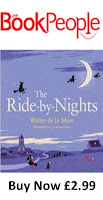
The Ride-by-Nights by Walter de la Mare and illustrated by CarolinaRabei


The Ride-by-Nights is a short narrative poem by the classic author, Walter de la Mare. It describes the journey taken by group of witches as they have fun flying through the night sky, making it a perfect read for Halloween.

Not only are we told about their antics as they 'whoop and flutter' and the speed at which they fly but de la Mare also tracks their journey by making references to various constellations they pass on the way before returning home.

 It is written in rhyming couplets with a rapidly moving rhythm. The meaning of the poem is enhanced using a range of poetic devices such as the playful and mischievous noises the witches make as they 'twitter and tweet' as they fly. 

Carolina Rabei's illustrations in this picture book version of the poem offer a rich and charming parallel tale of a group of young children as they go trick or treating on Halloween. We first encounter the children as they decorate the house in preparation for the festivities. Flying high above them are the witches and in the distance is a small red fox.


On the next two page spread, we move in closer to the children's cottage and see them in their Halloween costumes as they prepare to journey into the village for their evening of fun. As they journey towards the village we are treated to pictorial representations of the mischievous and playful actions of the witches. Throughout the story, the children are totally unaware of the witches and the fox. The fox, though, is aware and watches the activities of both the children and the witches from a safe distance.


The images work alongside the written text resulting in a beautifully multi-modal text that has so much to spot and discuss. The wordless images on a number of the pages could be used as a stimulus for narrative writing. As the story itself is already there in the pictures, children can focus on developing their skills of scene setting and characterisation. 


Rabei uses a limited colour palette for her illustrations, namely different shades of purple, which are often associated with magic. The scenes are made more magical by the bright twinkling stars in the sky, especially those which form the Milky Way. The warm yellow glow of the lights from the windows contrasts sharply with the cold night sky. Likewise, the red of the witches' hair, the little girl's stockings, the older girl's outfit, the pumpkins and the front door provides a hint of danger but one which is not menacing.

The result is an enchanting picture book which can be shared over and over again by children of all ages.


Publisher: Faber & Faber
Date of Publication: 2015
ISBN: 978-0-571-32422-4


Tuesday, 8 September 2015

Tappity-Tap! What Was That? By Claire Freedman and illustrated byRussell Julian

Claire Freedman's picture book story, Tappity-Tap! What Was That? Is a charming story about friendship and facing your fears. On a dark and stormy night, Owl, Mouse and a Rabbit hear a knock at the door and fear the worst - The Monster of the Woods. As the story progresses we witness them as they support each other in facing their fears: from Owl's plan just in case they should encounter the Monster, to curling up together in front of the fire with a cup of hot cocoa to finally finding the courage to peep through the peephole to see who it is at the door.

This is a beautiful book to share with young children. It would generate a great deal of discussion around the subject of fear: the kinds of things that children fear, who they turn to when they are afraid and the sorts of things that make them feel better. Owl, who is the largest of the animals in the story, takes on the traditional role of being the 'wise old owl' and as such the parental figure that the smaller animals turn to. This makes the text ideal to discuss charaterisation. What are Owl's qualities that make others turn to him for comfort? What evidence is there in the story to support the children's views?

For children in year 2, who need to develop their vocabulary and use a variety of synonyms for 'said', the text proves to be a good model of how to do this. Teachers need to consider with the children why Freedman has chosen to use the variety of words for 'said' that she does. What additional information do these choices give the reader. For children in year 3, it would be interesting to 'collect' the different words and then categorise them. Which synonyms for 'said' does Freedman use to indicate fear? 'gulped', 'trembled', 'shivered' etc. How might you categorise the other synonyms?

In terms of scene setting, Freedman creates the atmosphere of the storm through the use of onomatopoeia: crash, bang, howl, thump. The atmosphere of the story is further enhanced by Russell Julian's illustrations. The darkness that envelops owl, literally and metaphorically as he pretends not to be at home when he hears the tappity-tap tap, how the peephole in Owl's door enlarges the eye when rabbit looks in and reduces the size of the Monster when the three of them look out, the eeriness of the shadows as we peer through Owl's window. The black silhouetted image which contains the words 'The Monster of the Woods' depicts how through fear we tend to make things much bigger than they are in reality. Note the size of the spider and the unidentifiable fronds in comparison with the three friends. The images of the woods in the end papers could provide a stimulus for some descriptive writing. How could the children describe the trees to create that same sense of eeriness?

A picture book which could be read and enjoyed by children of all ages and in terms of the classroom can be used in a variety of ways to develop children's reading and writing.

Publisher: Scholastic
Publication Date: 2009
ISBN: 978-1-407131-68-9


Wednesday, 19 August 2015

How to Wash a Woolly Mammoth by Michelle Robinson and illustrated byKate Hindley

Michelle Robinson's picture book How to Wash a Woolly Mammoth is a delightfully quirky instructional text. The teacher is a freckle faced little girl. She meticulously takes us through the ten essential steps of the process. Robinson's minimal text is supported by Hindley's clever illustrations.

For teachers at Key Stage 1, this will provide a welcome alternative to the usual instructional texts that are available. It contains all the features of the genre: a goal in the form of the title; step by step instructions that are chronological in order; diagrams to support the instructions. It is also written using the imperative form of the verb 'fill', 'add', 'start', 'wash' etc. Each step also contains adjectival noun phrases, thereby providing a good model for children's own writing. The little freckled girl charmingly warns us about some of the possible difficulties we might encounter when attempting to wash our mammoth 'a mammoth's tummy is terribly tickly'.

Many of the steps are accompanied by illustrations and diagrams to exemplify the instruction. For example step 1 'fill the bath' is supported by 2 diagrams on what appear to be post-it notes Fig. 1: Empty and Fig. 2: Full. Others are humorous drawings depicting how the reader might get their mammoth into the bath.

When the little girl shampoos the mammoth's hair, she can't help but experiment with a range of hair dos for her mammoth and these are delightfully illustrated in the form of eight square frames. Hindley portrays how the mammoth reacts to this pampering session through the use of facial expression: from closed contented eyes, to wide startled eyes. We learn of the mammoth's emotions by paying careful attention to the illustrations throughout the whole of the picture book.

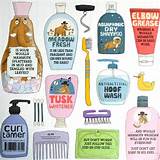
The end papers determine the actual beginning of the story and the end. At the beginning the little girl is playing with a bright blue star patterned ball and at the end after successfully washing her mammoth her wellies and ball are carefully placed together. The back cover depicts a whole range of mammoth related toiletries from bubble bath to tusk whitener and these have been cleverly used to display the ISBN of the book, the price and the synopsis.

How to Wash a Woolly Mammoth would be a useful and entertaining resource for any teacher who is studying instructional texts with his/her class as well as those who are investigating the Stone Age in history.

Publisher: Simon and Schuster
Publication date: 2013
ISBN: 978-0-85707-580-2


Monday, 20 July 2015

Superkid by Claire Freedman and illustrated by Sarah McIntyre


Superkid is a superhero story with a twist. In Claire Freedman's tale, the superhero is there to save children from their everyday troubles: the bully at school, eating healthy vegetables and room tidying, as well as the extraordinary: pirates that make you walk the plank. What makes this superhero special is the fact that he or she is most probably the reader's friend!

The story is told through a series of humorous incidents where Superkid saves the day. The story could be enjoyed simply as a 'read aloud' text to promote a love of books in foundation stage and Key Stage 1. However, it also has the potential for developing children's understanding of character. Although Superkid is quite likely to be a classmate, he also possesses the powers you would expect of a superhero: changing into his superhero costume in an instant, x-ray eyes, flying, making things disappear, putting things in order, rescuing people from evil monsters. 


Like Sue Hendra's Supertato, Superkid utilises some of the features you would expect to see in comic strips, in particular onomatopoeia, e.g. Zapp, whoosh and puff. Sarah McKintyre's illustrations take this one step further. You will find examples of the zig zag frame to indicate something happening quickly, lines after a character to indicate movement, the action of the story told through a sequence of brightly coloured frames. Her illustrations also provide the opportunity to examine how different facial expressions indicate different thoughts and emotions: shock, surprise, fear, relief, delight.

The end papers also merit comment. At the beginning of the book, you have a wordless text which tells the story of a superhero through comic strip frames which again use a number of conventions associated with comics. As such, this provides the opportunity to explore and discuss these features with children before creating their own comic using an application such as comic life. The papers at the end of the story are annotated character portraits: a possible stimulus for work in class.

As you would expect from Claire Freedman, the text is presented as a rhyming story. It is fun and fast paced and could be decoded by children who are working at phase 5 or beyond.


Publisher: Scholastic
Date of Publication: 2013
ISBN: 978-1-407124-06-3


Monday, 13 July 2015

Supertato by Sue Hendra

Sue Hendra's Supertato is a quirky take on the standard superhero tale. It's set in the vegetable section of a supermarket, not a child's first choice of where to find a hero of any sort, usually. The hero of this story is a rather rotund potato! Nevertheless, he has all the characteristics you would expect of a superhero. The evil villain is the smallest character in the book, the pea. 
This is a pacey read. The style of the writing includes a number of authorial questions to engage readers. The simple plot moves swiftly along through the use of dialogue which will appeal to young children. The story is delightfully silly. The narrative coupled with the dialogue has all the features you would expect in a comic superhero tale: slapstick, good versus evil, mild peril and the inevitable happy ending.
Alliteration is used for comic effect to describe how Supertato stealthily creeps up on the mischievous pea. 'Crept through the cakes'.....'checked the cheese'. There is also an element of comic strip writing with features such as 'kerpow!' Children will love rewriting this as a comic strip using an application such as comic life. This could be used to emphasise the words within the speech marks or develop the use of temporal connectives (adverbials).
Other writing activities might include wanted posters, newspaper reports or play scripts.
The illustrations help the story along enormously. Supertato is depicted as a typical superhero, with his super belt around his rather plump middle, his bandit-like eye mask and his superhero red cape. Evil pea's eyes look demonic at the beginning of the story. The facial features of all the characters are full of emotion, ranging from horror, surprise, shock to the twinkle of Supertato's teeth to illustrate just how good he is. The pictures are bright, with lots of primary colours and plenty to see on each page. This would be really fun 'read aloud' to a group of children in foundation stage or Key Stage 1. It would also make an ideal book to read as part of any project on Superheroes or healthy eating.

Publisher: Simon and Schuster
Date of Publication: 2014
ISBN: 978-0-85707-447-8

Sunday, 22 February 2015

The Scariest Thing of All by Debi Gliori


Debi Gliori's picture book, The Scariest Thing of All, is about a little rabbit called Pip. He is the smallest of his family but he has the biggest imagination.  Pip is scared of just about everything, from tree stumps to unusually shaped clouds and his worries begin to wear him out. When Pip is awoken from an afternoon nap by a strange growling noise, he is so frightened that he runs away. Unfortunately, he runs into the dark and forbidding woods. Finally he stops deep in the woods and sees the scary thing nearby and hears the sound again. This forces him to be brave and figure out what the scary thing is, which in turn helps him confront his fears and realise that things aren’t always quite as scary as first he thinks. 

Children in Foundation Stage and Key Stage 1 will enjoy the humour and the imaginative writing in this book. Through shared reading of the story, children will enjoy exploring the fearful creatures Pip imagines the everyday objects of the wood to be: rainfall to "...the sound a vast hisster makes as it weaves its web." and a "...gobbler blowing bubbles at the bottom of the lily pond." The journey into the wood and back home again is reminiscent of that the mouse takes in Julia Donaldson's The Gruffalo. Pip returns home with a new found confidence.

The language used to describe the journey usefully introduces children in Reception and Year 1 to the prepositions 'into', 'through', 'across'. Teachers could build on this vocabulary with the much loved Pat Hitchins' tale of Rosie's Walk

Year 1 and 2 will also enjoy playing with the onomatopoeia in the book as they read of the 'flippity flap' of the insects, the 'aaark, aaark' of the gulls, the 'rustle, rustle' of the caterpillars, the 'hoowit, hoowit' of the owl and of course the 'raaarrrr' of the scariest thing of all. There are other examples of onomatopoeia later on in the book which children could 'collect' for the working wall, before expanding their list of examples from other texts and their own imaginations.

It is also a lovely story to revisit at Key Stage 2 when looking at personification. Pip imagines each of the inanimate objects to be a living creature, making them hiss, blow bubbles, bite, wave, move, slide and agree. Gliori's ink and watercolour illustrations, particularly the one in the wood of the upturned tree, provide the stimulus for a discussion about personification, exploring the human qualities that can be attributed to the tree. 


The tones and colours of this particular two-page spread exemplify the devices authors often use to create suspense: cold, dark, moonlight, silhouettes. This particular composition also captures the emotion of the action via its scale ( pink-eared Pip is surrounded by large shadowy trees in midnight blue). The incredible blue moon rising above Pip gives a really haunted feeling.


It is a beautifully illustrated book, designed to be pored over. There are holes to look inside, tree rooms to investigate and scary creatures to tame. The art of this picture book is really special beginning with the sunny warmth of Pip's family and home to the dark blueness of a the woods at night returning to supper and the golden glow of home. 

 A truly stunning book which can be enjoyed on many levels.


Publisher: Bloomsbury
Publish Date: 2011
ISBN: 978-0-7475-9969-2